Is it time to plant seeds yet?
No, it's too early.
Can I shovel manure?
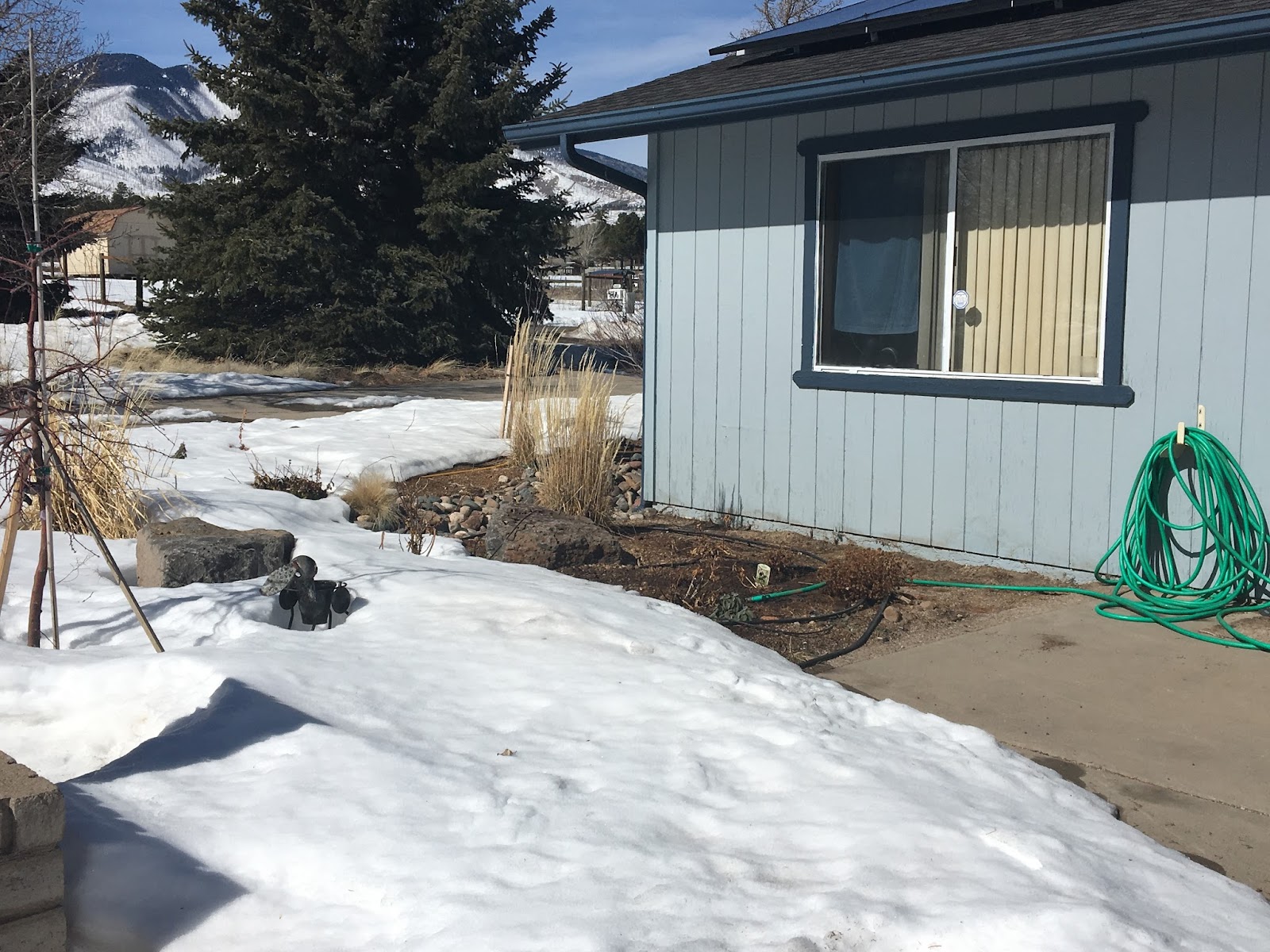
No, the garden is covered with snow.
Can I plant something?
No, the ground is frozen.
Can I buy something?
No, it'll die before you can plant it. Besides, the only things in the garden centers are junipers, and your husband is allergic to junipers.
Maybe he can just take Benadryl?
No.
Can I prune the roses?
No, you can't do that till the forsythia blooms.
Whyyyyyyy? WTF is so special about “when the forsythia blooms?”
Because we say so, say the experts with their prize-winning blooms and snooty British accents.
In fact, for most of the winter my inner monologue sounds like a mother talking to an especially whiny toddler. Or like this:

And so it goes, through January (long, cold, and boring), February (short, cold, and boring) and into March, when the ground might actually thaw, pansies might actually show up at Home Depot, and I might spend every day refreshing the National Weather Service page for Flagstaff, hoping to see a sunny day that doesn’t involve 40 mph wind gusts. As I write this, it’s mid-February, and I’m cold and bored. There’s an inch or two of snow on the garden, the ground is frozen solid, and my dogs have resorted to bringing icicles in the house to chew on. It wasn’t always like this.
I started gardening as a small child in Tracy, near the San Joaquin Delta in California. We had winter there (contrary to the popular belief of everyone who didn’t grow up in the Golden State), but it consisted of “cold” days (highs in the 50s) with a little fog or rain or wind on occasion. My mother didn’t garden much in the winter, so mostly neither did I. I do remember someone (probably Mom) telling me you could grow carrots in the winter. So one bright winter day, I seeded two long rows of carrots in the backyard. I don’t know how old I was but probably around ten or so. I do know it was an age that predated common sense. How do I know this? Because I chose to plant those rows of carrots… directly under the clothesline. Needless to say, we didn’t have any carrots that year. (Note for those under 35: A clothesline was a long piece of cord tied between two poles and used for hanging laundry. It’s what we had before dryers, and we liked it. Now get off my lawn.)
I puttered around at gardening here and there (Vancouver, Washington, and Dalton and Ringgold, Georgia, to be specific), but I didn’t start gardening in earnest till we moved to Portland, Oregon, in the mid-1990s. There winter was loooooonnnnnnngggggggg, dark, and very, very wet. My first winter in Portland, the rain started on Labor Day and didn’t stop for more than a day or two at a time till June. It was excruciating. On the rare sunny winter day in Portland, I’d clomp outside in my gardening boots, desperate to see some sign of spring--and promptly sink into the mud. If I walked on the lawn, I left big, ugly mudprints across it. But I’d do it anyway, because even approaching middle age, I still had no common sense. I started getting interested in digital photography in the mid-2000s, so I’d take my camera outside in the mud and try to find something pretty to photograph. In Portland. In January. That’s when I fell in love with hellebores, the only flower to be found on those short, dark, dreary days.

A couple of years after the digital camera, I got a greenhouse in an attempt to preserve both my plants and my sanity during Portland winters. Then I spent winter weekends planting flats of seeds and tending potted citrus trees while listening to the rain rattle against the polycarbonate roof of the greenhouse. The greenhouse and the power to heat it weren’t cheap, but they were probably cheaper than therapy and antidepressants, and they cut down considerably on my whining.
In 2010 we decamped for the San Gabriel Valley in Southern California. For the first year or so, I was a kid in a candy store. I’m pretty sure I bought every citrus tree in a 25-mile radius of our house: lemons, limes, oranges, blood oranges, kumquats, even mandarinquats. Yes, mandarinquats are an actual thing. They’re even edible, though “mandarinquat” sounds like a pesticide. For the first time since I was a kid, I could garden in the winter--actually garden, in an actual yard, in actual soil. And a good thing too, because I sure as hell couldn’t garden in the summer unless I wanted to die of heatstroke. You try digging in 114-degree heat.
And so I could be found planting roses in January, harvesting lettuce in February, and juicing oranges from Christmas till Easter. It was blissful. I no longer dreaded winter, though I could often be found trying to dig and plant and weed at twilight in order to wring every last moment out of a short winter weekend day. I wouldn’t give up till well past the time when it was too dark to tell a dandelion from a black widow. Apparently I still had no common sense.
And now I find myself in Flagstaff, where the weather tries to thwart me at every turn. Snow, frozen ground, monsoon rains, howling wind, and dry springs that kill seedlings and nurture wildfires. Most of the time I love it here… but this is not that time. This is the time when I’m done with the cold and snow and frozen ground and bloody nose from dry air and covering stuff with frost blankets and sliding on ice to get to the damn compost heap. Done with my gardening being limited to babysitting my houseplants and spraying my lemon tree for scale. Yes, I have a lemon tree. It’s in my living room from October through May. Thanks to my husband hand-pollinating it with an artist’s brush, it’s even making lemons.

Soon the daffodils will break ground, buds will swell on the apple trees, I’ll be able to take the 2 feet of soil and straw off the roses, and my gardening options will no longer be defined by Grumpy Cat. But till then I’ll make due with seed catalogs and planning next year’s garden and buying roses from big box stores when I find myself in Phoenix, then bringing them back and trying to keep them alive in my garage till April. Yep, you guessed it, I still have no common sense.